

I first published this case in December 2022, and now have a *ton* of updates about it.
A 12-year-old girl was taken to urgent care for fever, malaise, and respiratory difficulty.
She appeared unwell, so the NP called 911 and the patient was taken to the ED at a children’s medical center.
A nurse practitioner (Ms. E) and PEM physician (Dr. P) both evaluated her.
Her influenza test was positive.
After observation in the ED she was felt to be doing better, so discharged home.
The next morning her parents noticed that she was doing worse, and called the ED back to see what they should do. Apparently they were rudely told to take her to see her pediatrician.
Unfortunately, she drastically decompensated.
She was rushed back to the ED, intubated, and started on VA ECMO.
She survived but suffered a stroke and has permanent disability.
Her family sued, alleging that she should have had a chest x-ray, should have been started on Tamiflu, and that only checking one set of vitals on her was negligent.
When I published it, the PEM doctor had settled, but the lawsuit against the hospital was ongoing.
Here’s the new information we’re going to hit today:
defense expert opinion
the PEM doctor testifying about vitals that weren’t recorded in the chart
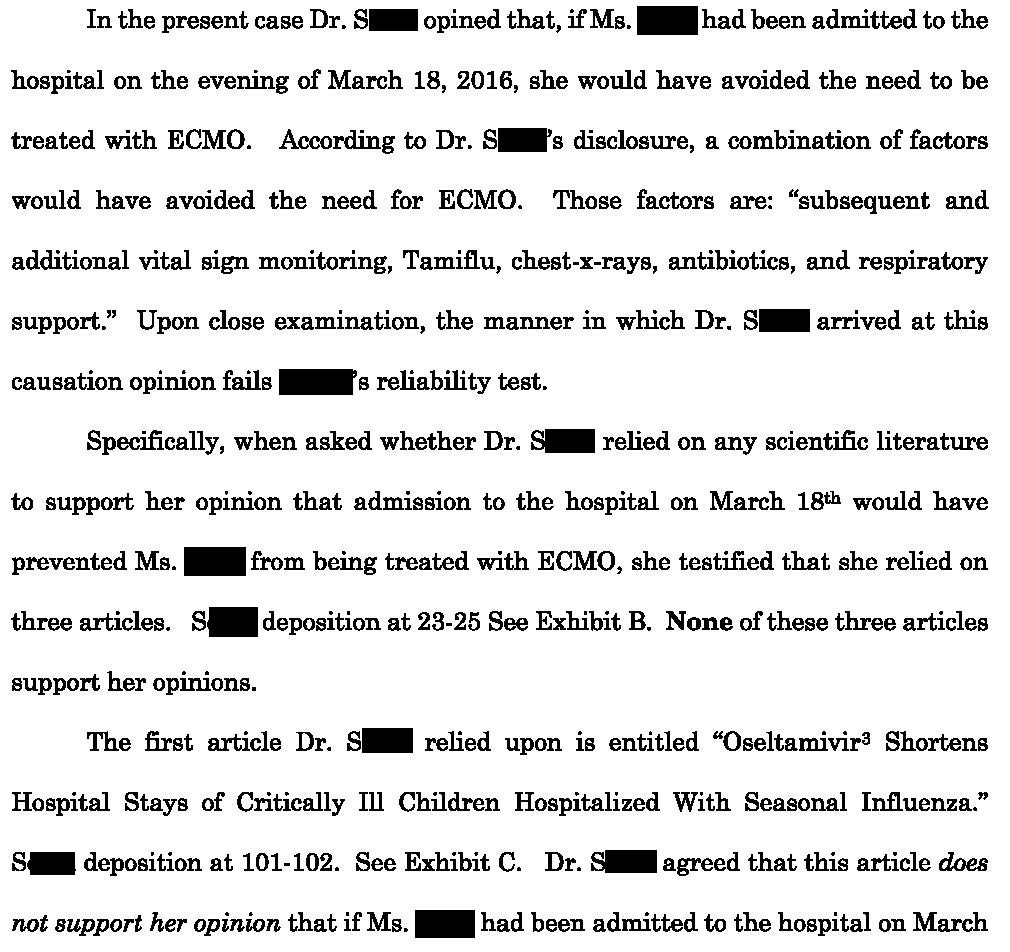
the defense challenging the literature that was cited by the plaintiff’s pediatric ID expert in a “Daubert motion” (if you don’t know what this is, it’s a great opportunity to learn the basics)
discussion of the discharge paperwork and return precautions the patient’s parents were given.
Not only that, but we’re kicking off this year’s flu season, so I thought this was great timing to re-surface the topic of influenza malpractice cases to keep us on our toes.
First, the defense filed a PEM expert to rebut the claims made by the plaintiffs.
Improve your practice by reviewing malpractice cases.
Paying subscribers get a new case every week.
One of the plaintiff’s key criticisms was that only one set of vitals was done, which were taken on arrival and are shown here:
Heart rate: 152bpm
Respiratory rate: 28/min
Temp: 102.9F
Oxygen saturation was in the mid-90s.
No repeat vitals were documented, even at discharge.
However, Dr. P would later testify that the vitals were being monitored the entire time, but that they simply weren’t documented.
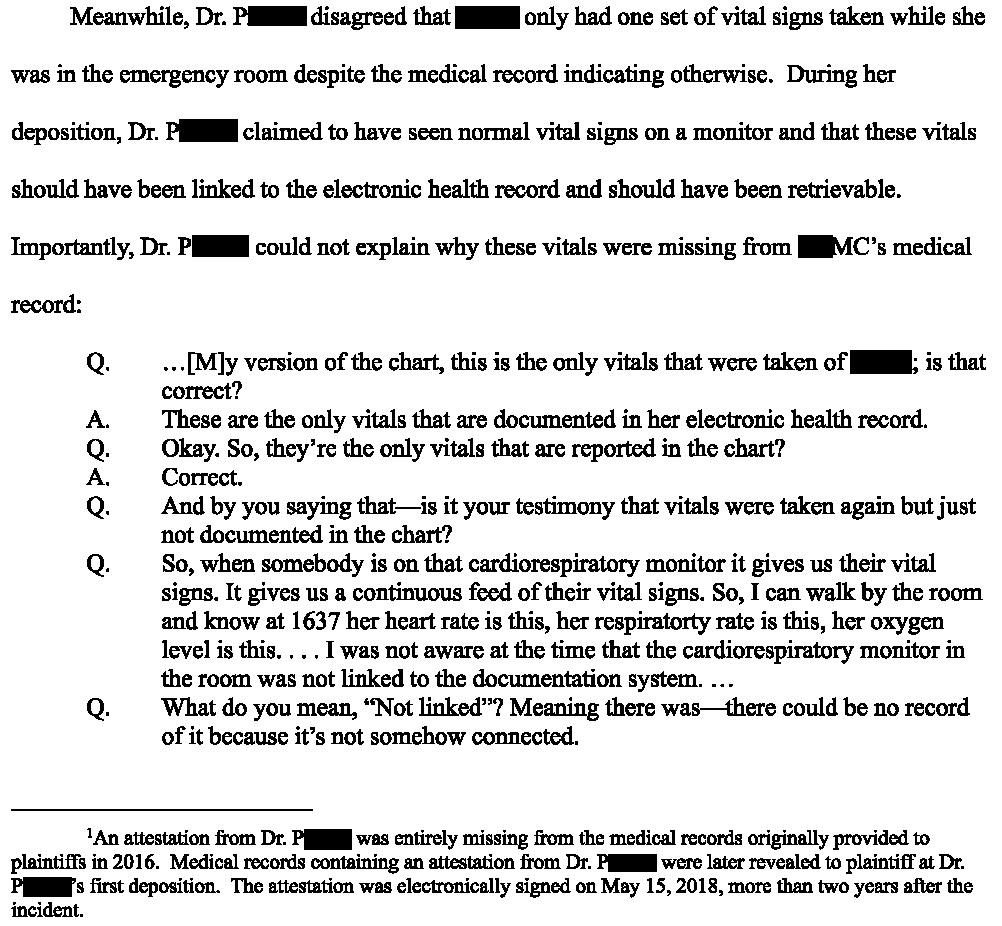
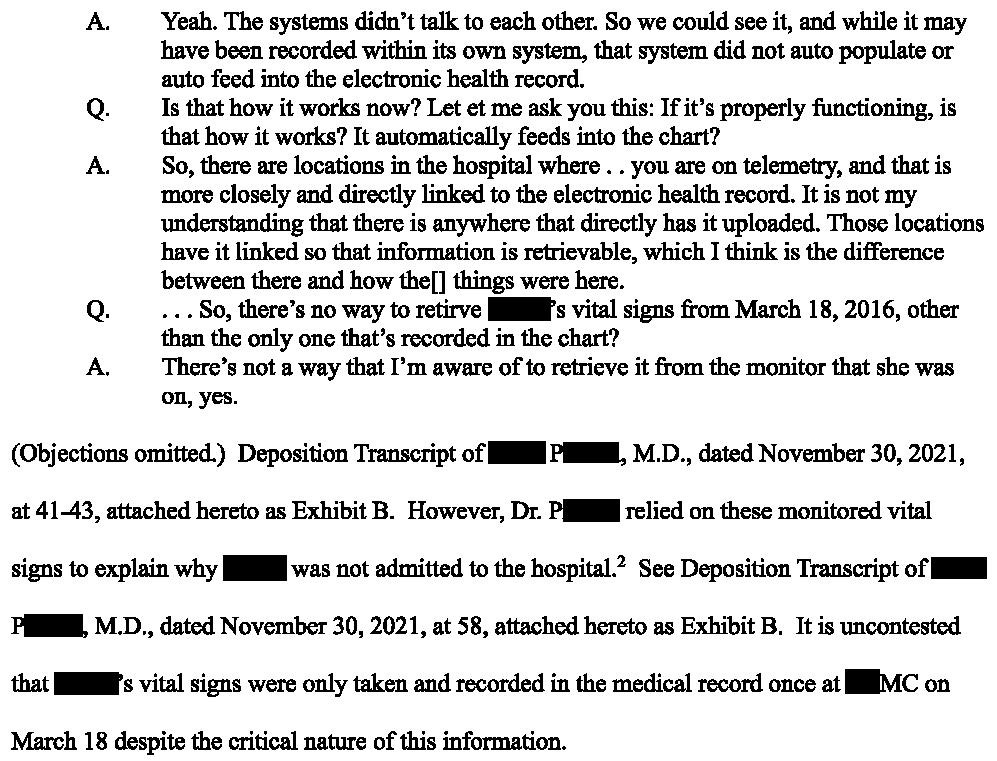
The plaintiff asked the judge to bar any testimony of undocumented vital signs, but the defense vigorously opposed this motion.
I can certainly understand how this happened. It’s easy to glance at a patient’s vital sign monitor multiple times and not realize the vitals aren’t being documented. I don’t buy the advice that “if you didn’t document, it didn’t happen”, but you better believe the plaintiff is going to argue that way.
The thing that surprised me most about this excerpt is the footnote. Apparently Dr. P signed something on this patient’s chart 2 years after this happened. If there’s anything you should learn from this newsletter, its to never go back and alter a chart after a bad outcome has occurred (at least not without talking to your malpractice insurer or hospital attorney first). I’m a bit surprised this was only a footnote in the case, not a major point. Dr. P got lucky. I’ve covered cases in which the doctors did something similar and didn’t get so lucky (here and here).
The plaintiff hired a pediatric infectious disease specialist, Dr. S.
During her deposition, she claimed to have used 3 articles to arrive at his conclusions:
The defense challenged the validity of his claims via a Daubert motion, highlighting multiple ways in which the articles she cited did not apply to this case.
The legal pathway to excluding an expert is called a Daubert challenge in federal court, with multiple states adopting the Daubert standard or some similar set of rules under a different name (Frye, Porter, etc…)
I get a lot of questions from readers about how a dishonest expert can be stopped. These “Daubert motions” are the primary legal route that can be used to stop an expert who is testifying in violation of evidence-based standards, so I included it despite being fairly lengthy.
Feel free to skip it if you don’t want to nerd out. It’s the closest that most courts come to arguing the actual evidence and research. In some sense, it’s like a high-stakes journal club.
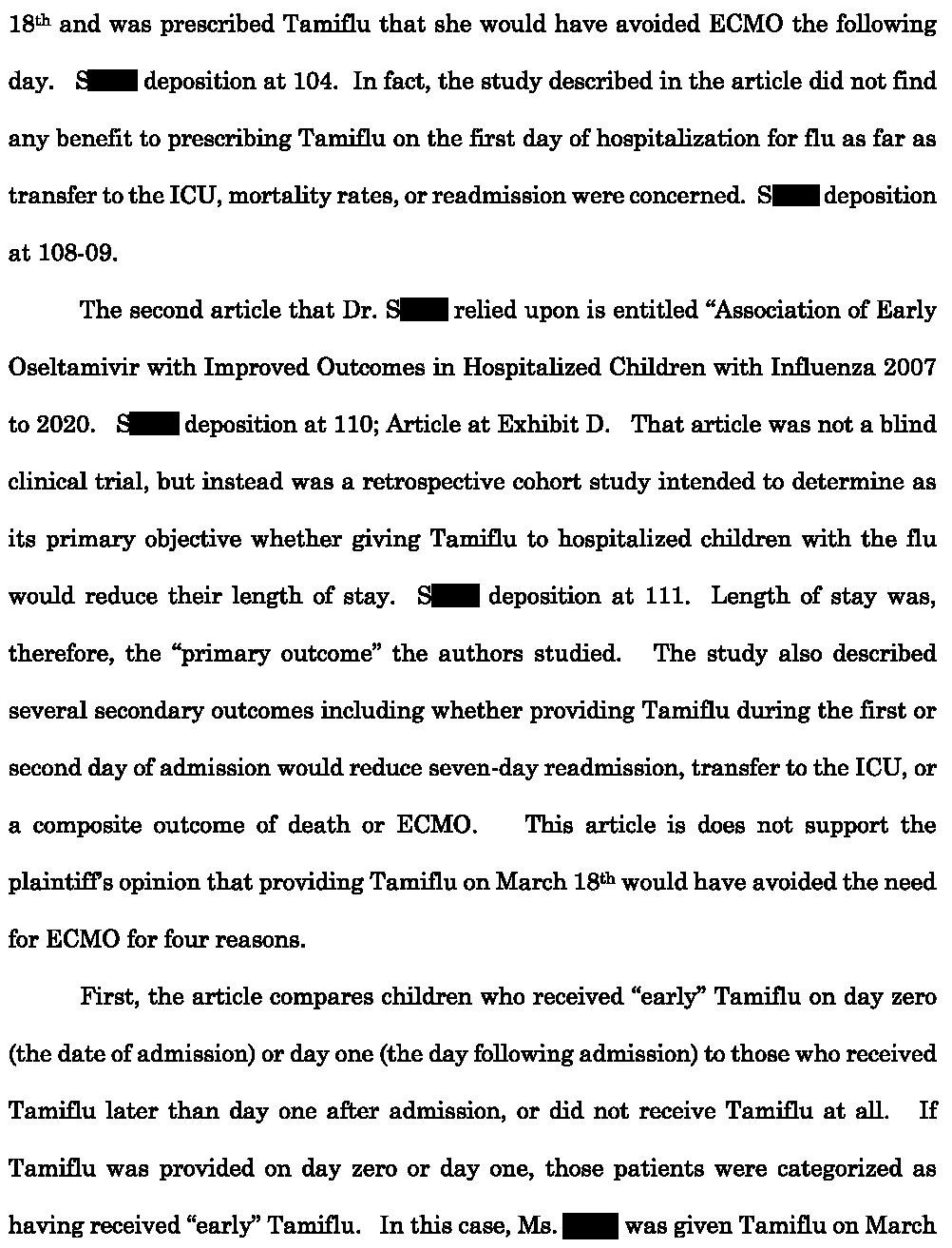
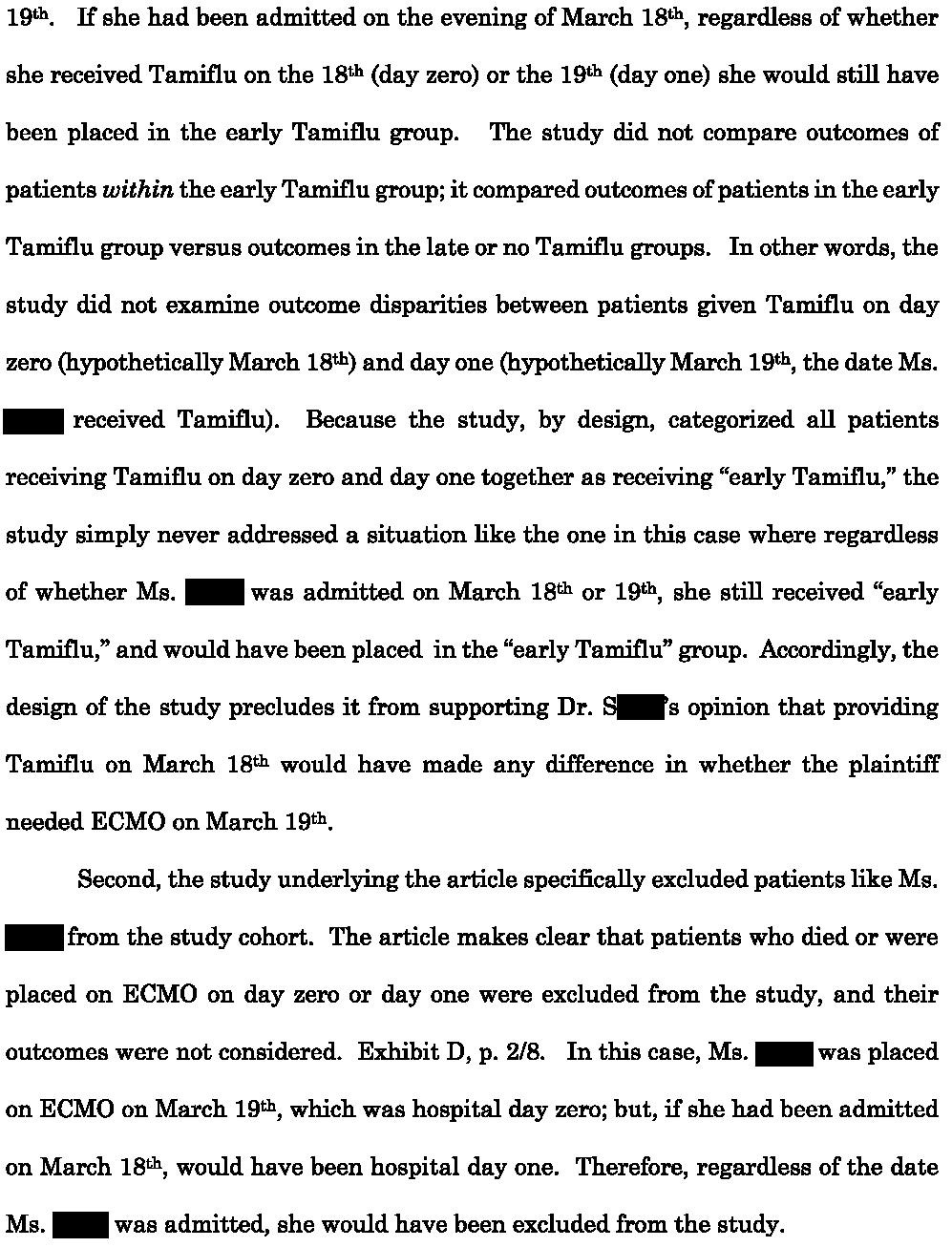
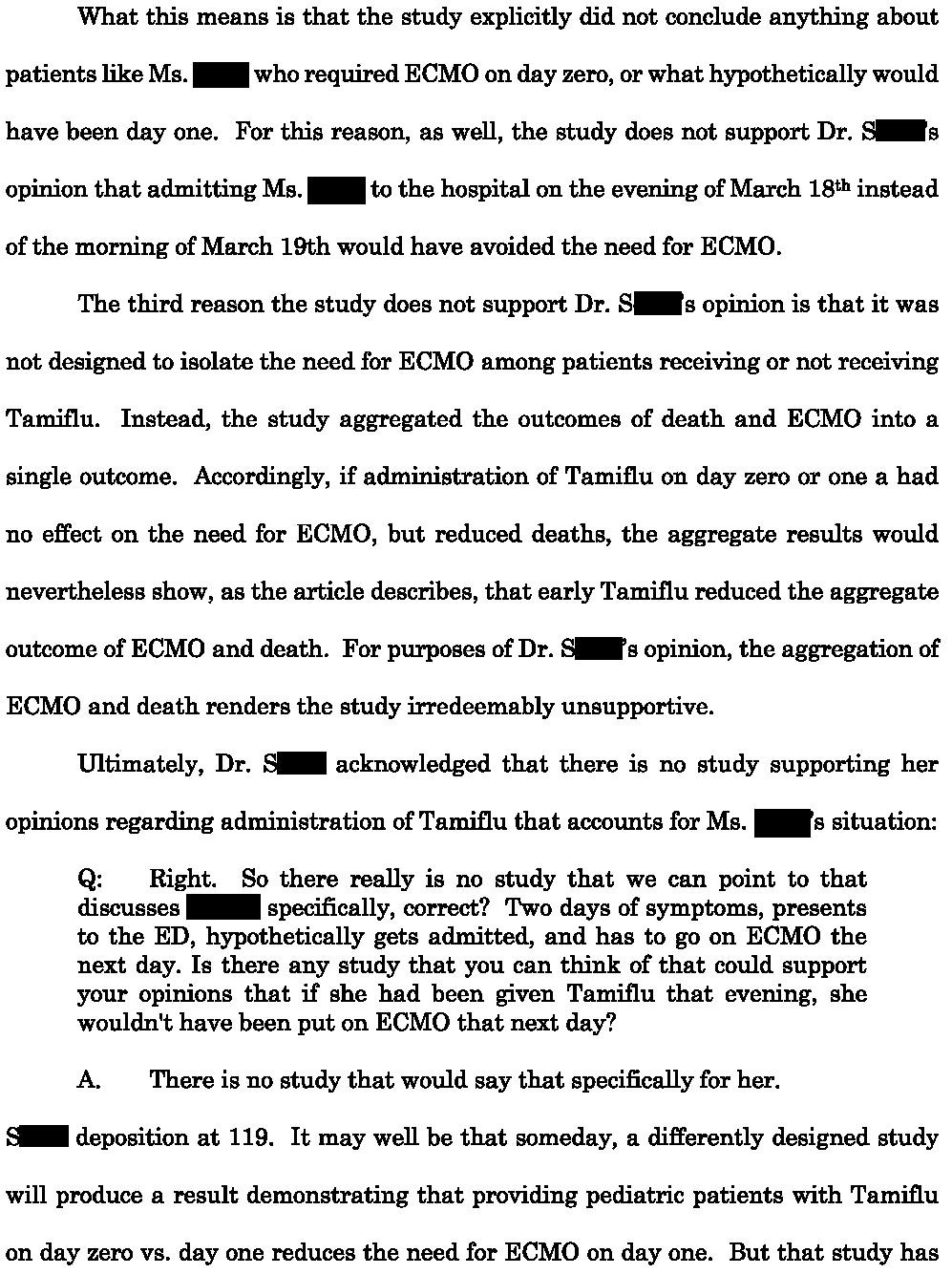
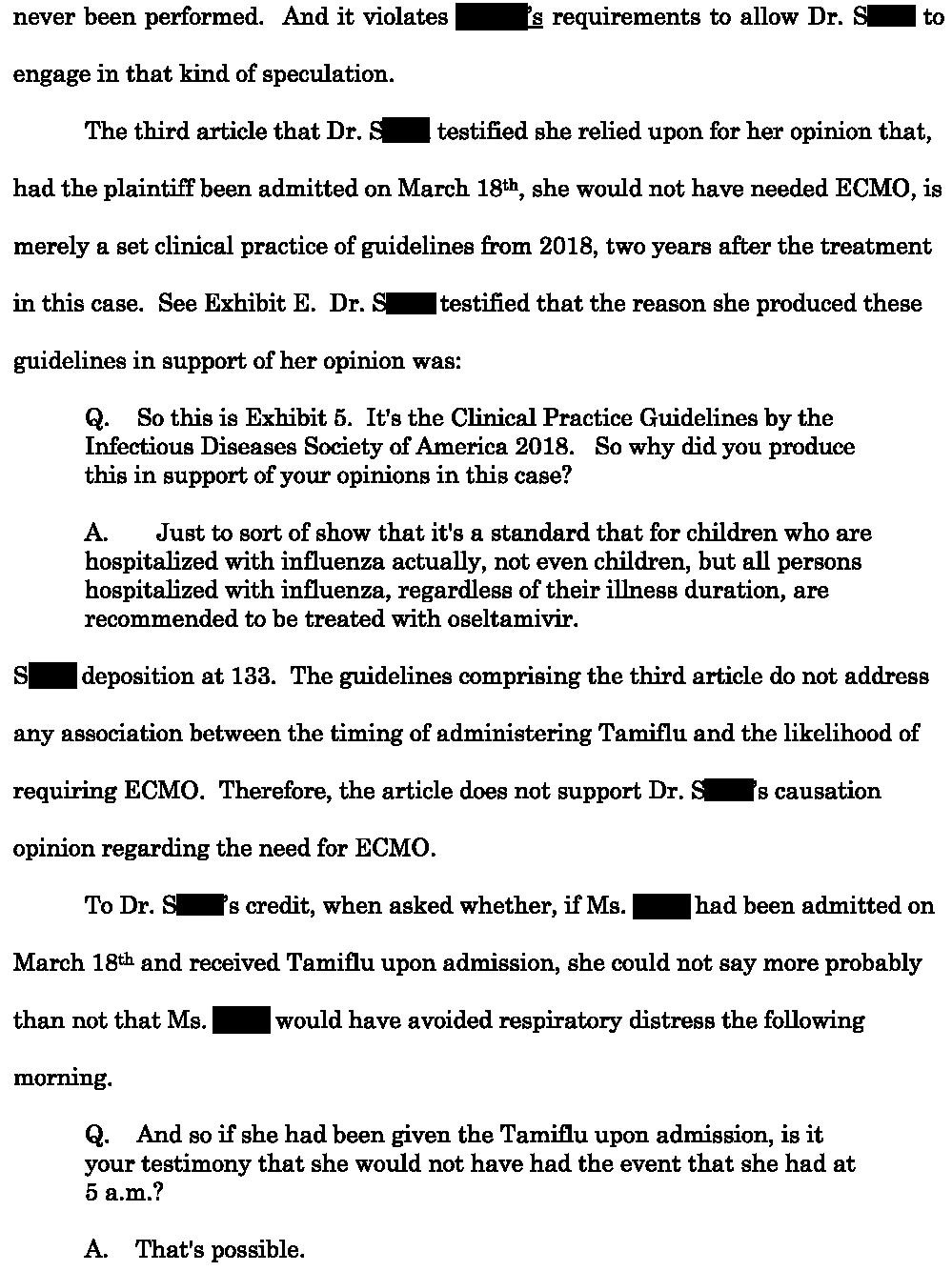
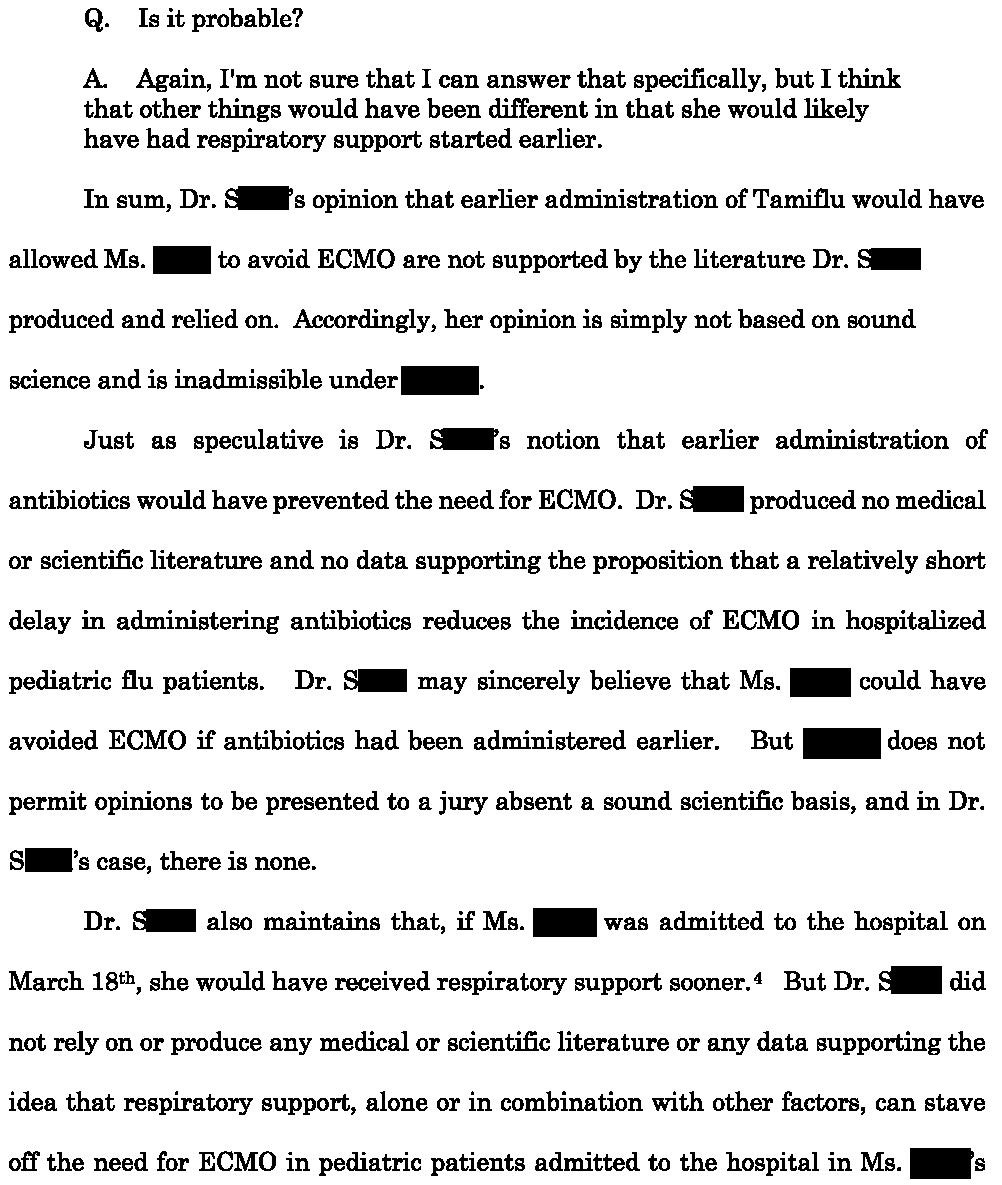
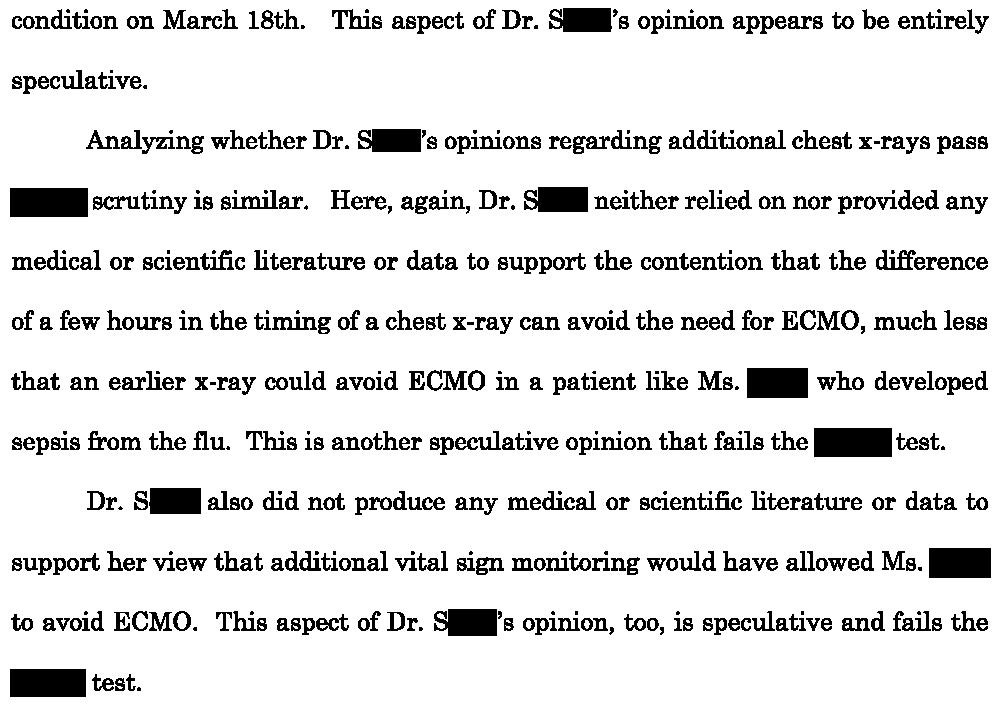
Usually after each side submits their arguments, the judge would issue a ruling on what parts of the testimony would be banned and which parts would be allowed.
However, this lawsuit was settled before the judge ruled.
Learn about medicolegal topics and expand your expertise.
Paying subscribers also get access to the entire archive of cases.
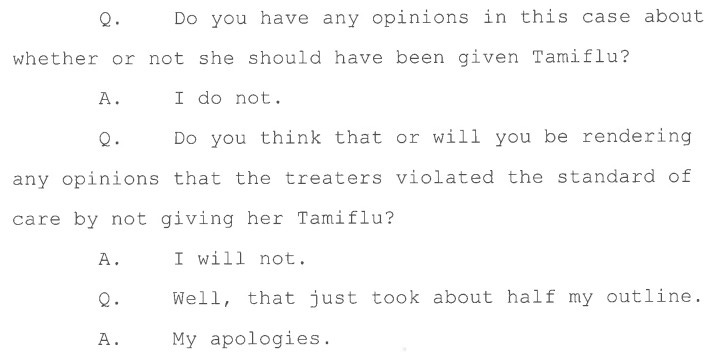
Prior to settlement, the plaintiff’s PEM expert had been deposed by the defense.
The defense attorney came ready to discuss the utility of Tamiflu in great detail, hoping that he could catch the expert saying something that defied the (lack of) evidence for giving Tamiflu.
However, the PEM expert surprised him by not offering any opinions about Tamiflu.
The final piece of interesting information in this case was about the return precautions and discharge instructions.
This topic always catches my attention, because it seems that many patients do not follow the instructions they are given.
It has played a prominent role in previous cases I’ve covered, including one of my most popular cases ever, about a young man with COVID who died of a PE.
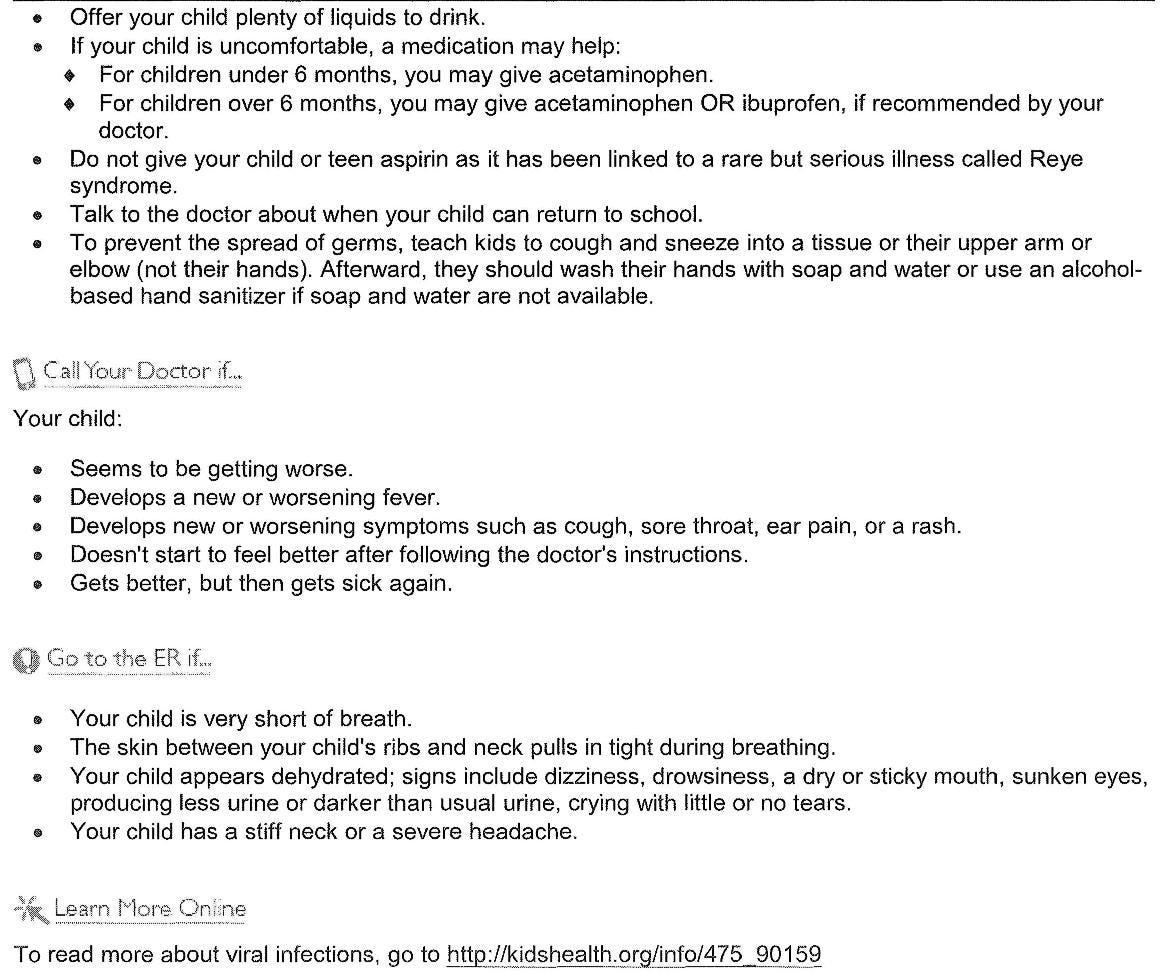
Here are the discharge papers that the patient’s parents were actually given in this case:

The patient’s mother was deposed.
She described how her daughter was doing after being discharged, and how she and her husband reviewed the discharge papers.
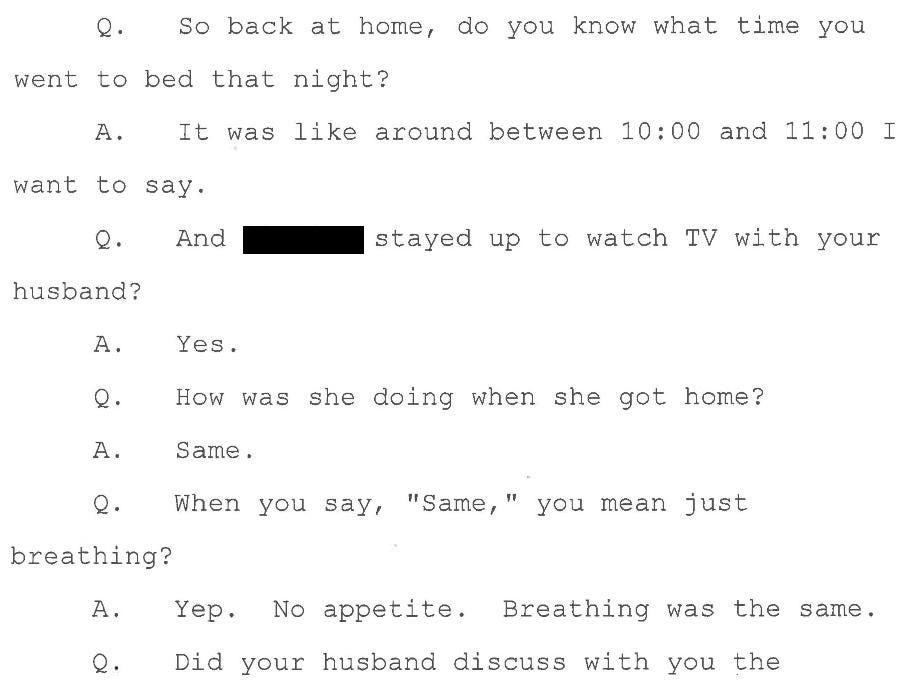
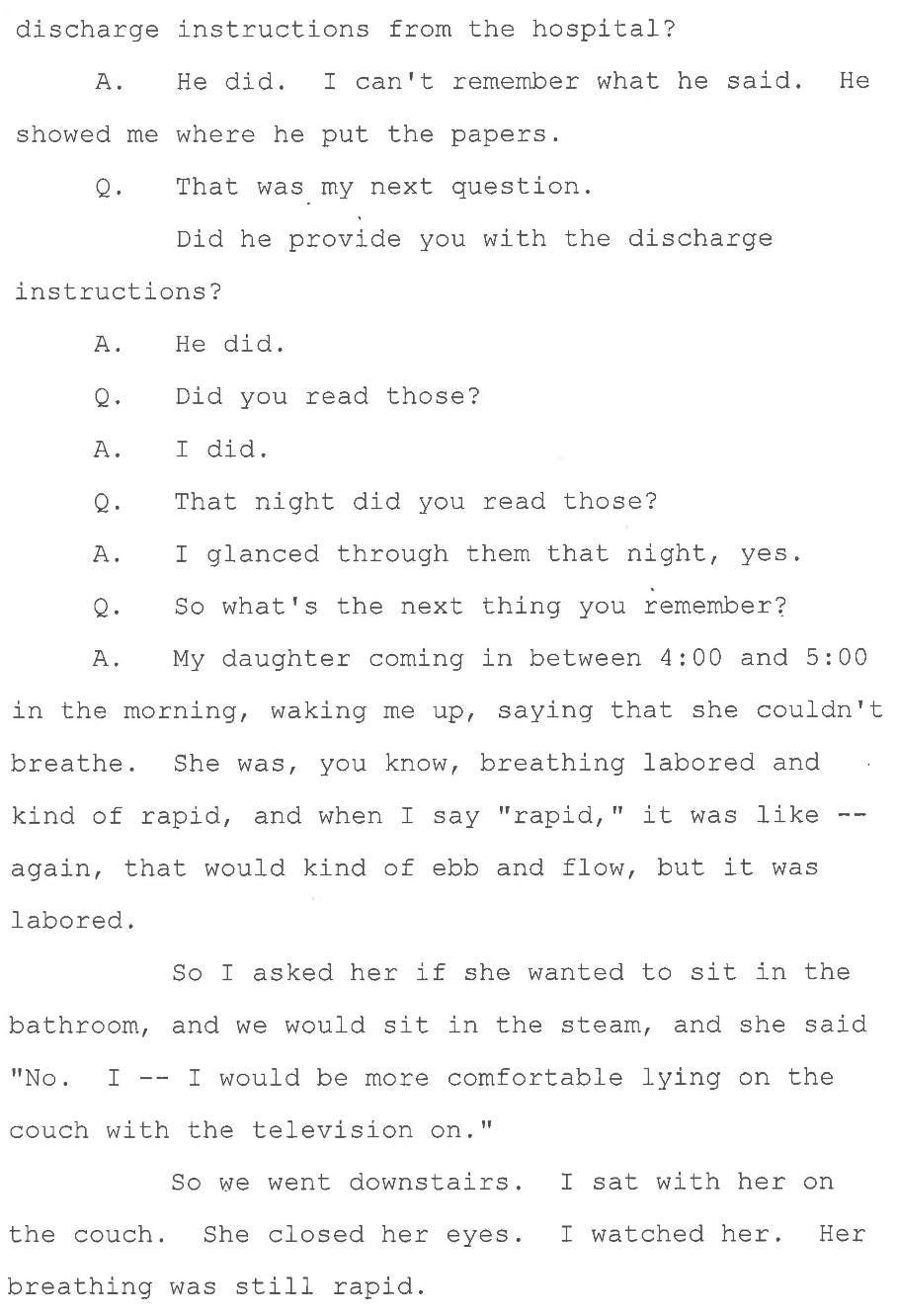
Besides the discussion about reviewing the discharge papers, I think the more interesting thing about this excerpt is that it provides an excellent reminder that children compensate really well until they suddenly crash. They usually don’t act like adults that have a long and slow decline during which there is more time to intervene. This is a learning point that is repeatedly drilled into the brain of every trainee who sees children. The child in this case had an increased work of breathing but was up, walking around, talking, wanting to watch TV, just a few hours before being put on ECMO.
The mother was also asked about her decision to call the ED later that morning.
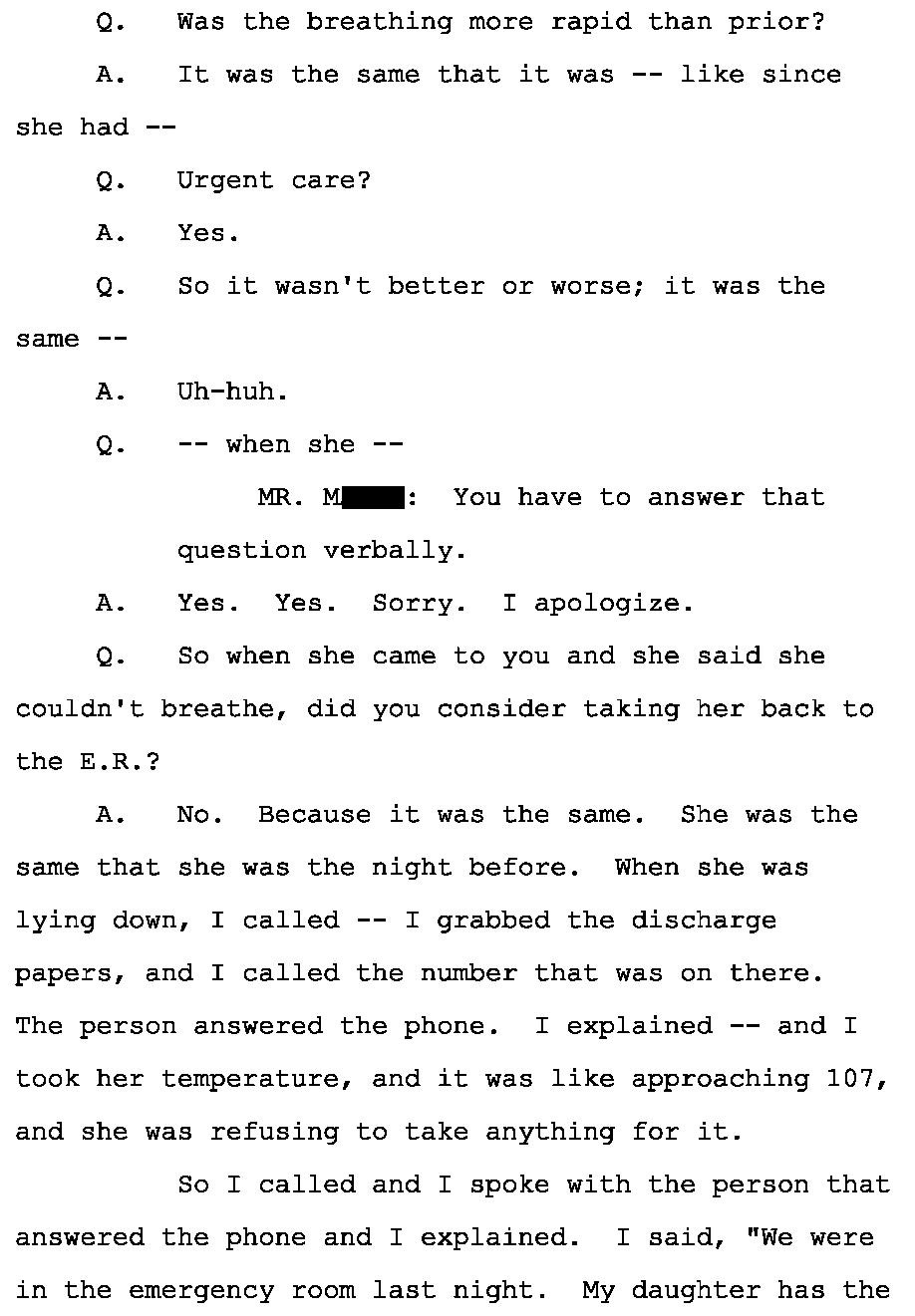
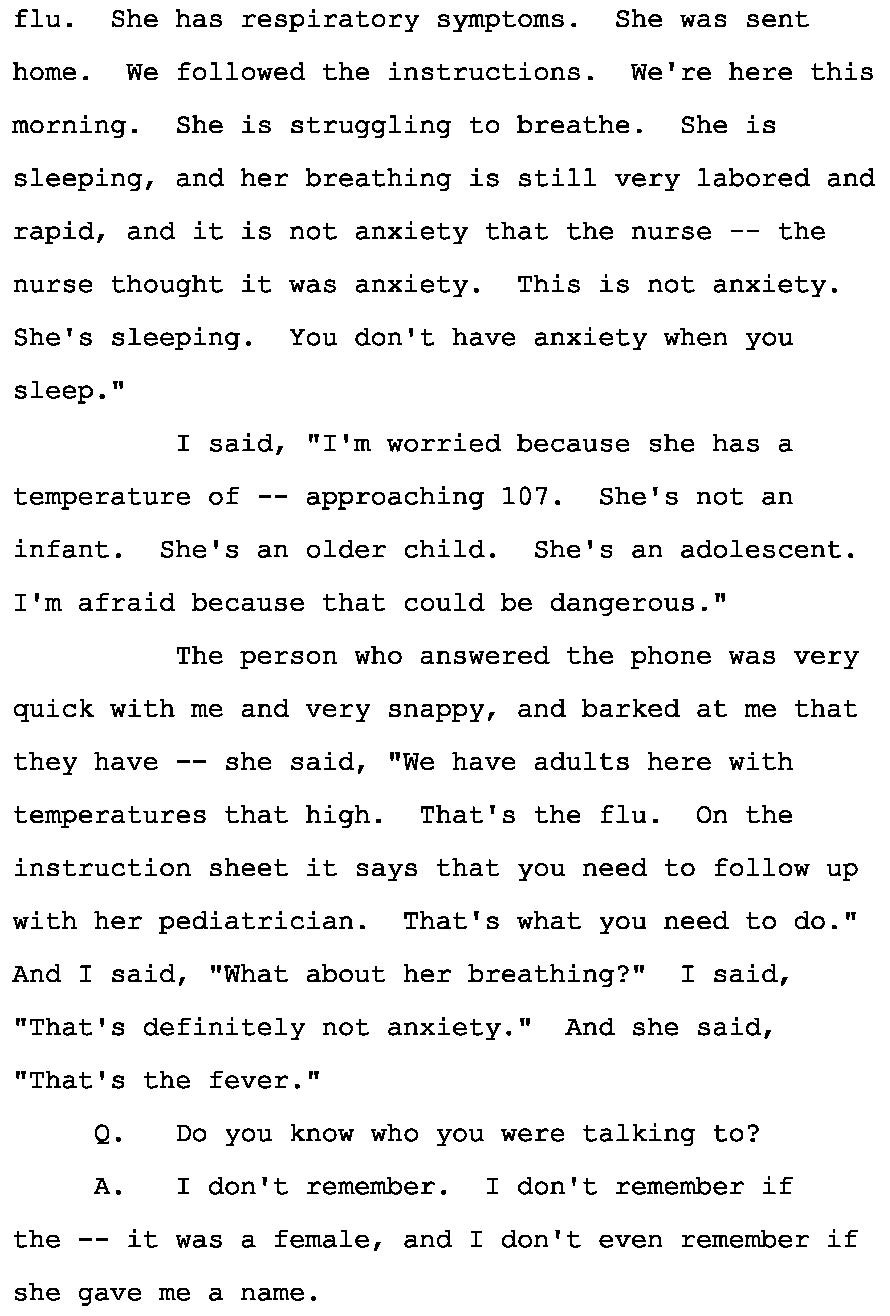
I’m honestly not surprised about their poor experience with the call to the ED. Most ED secretaries are very salty and impatient, which is a function of the onslaught of ridiculous calls that they field. Calling the ED and asking a secretary for medical advice is unwise but most patients fail to grasp that they’re not going to be able to talk to anyone with medical training if they call the ED. They might be able to get medical advice from a nurse line or from their PCP office, but not by calling the ED (even if they were just there as a patient within the past 24 hours).
Trying to get medical advice over the phone is always dangerous. Sometimes its because the message never gets through, and sometimes its because assessing someone without seeing them inherently predisposes to bad advice. I’ve covered this topic in multiple malpractice cases:
Patient calls psychiatrist multiple times, never gets a call back.
Post-surgical patient calls office, given advice, but not evaluated in person.
Nurse tells PA about call, who tells doctor, who says to tell patient his pain is normal. Patient dies of abdominal sepsis after surgery.
Practicing medicine via phone is dangerous! There are times when it’s necessary or pragmatic, but make sure you (and your staff members) understand the risk you’re taking by doing this.
The patient’s father was also deposed about what he remembers being told in the ED about the return precautions.
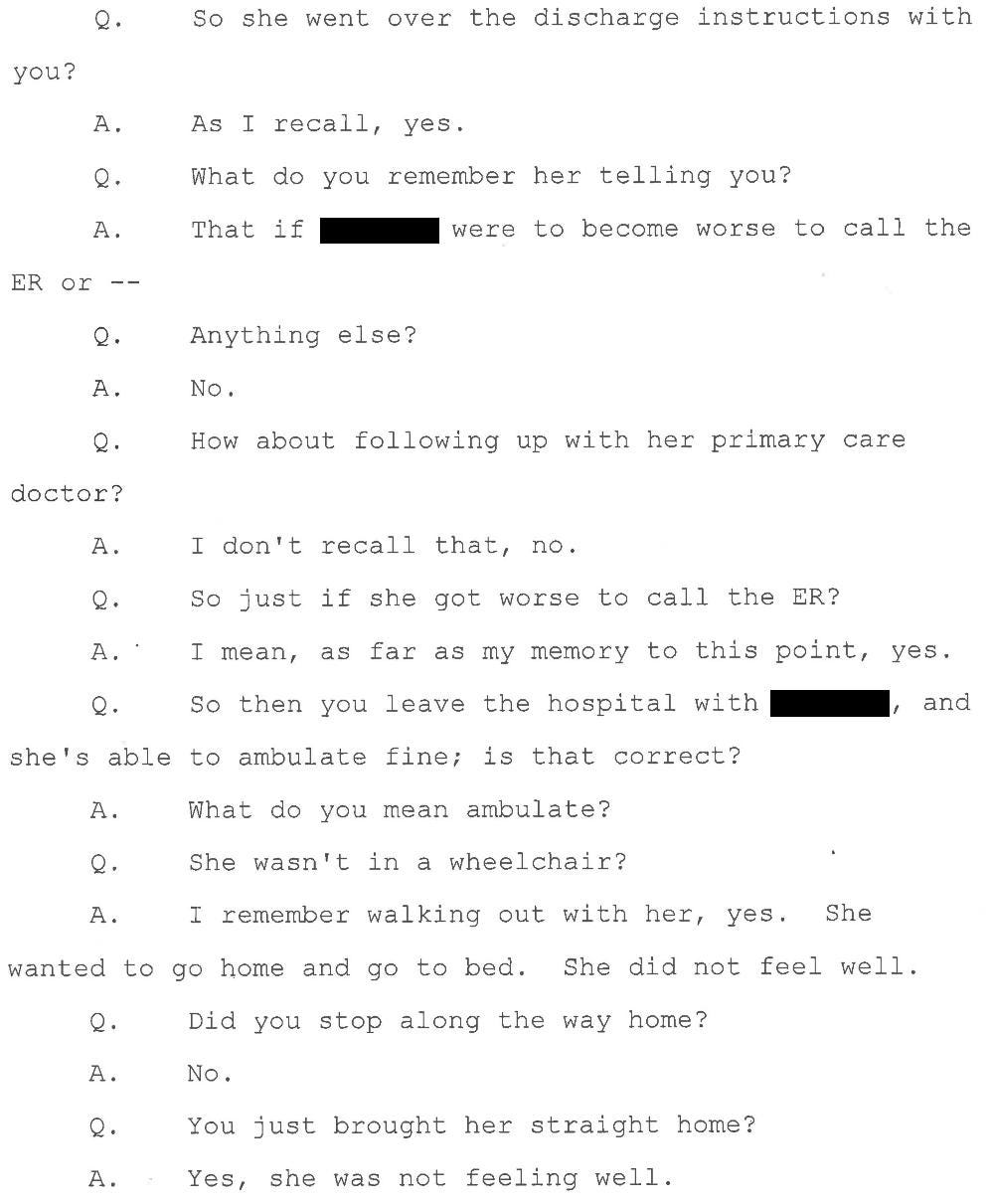
The father was later asked about how she was doing at home, and the phone call back to the ED.
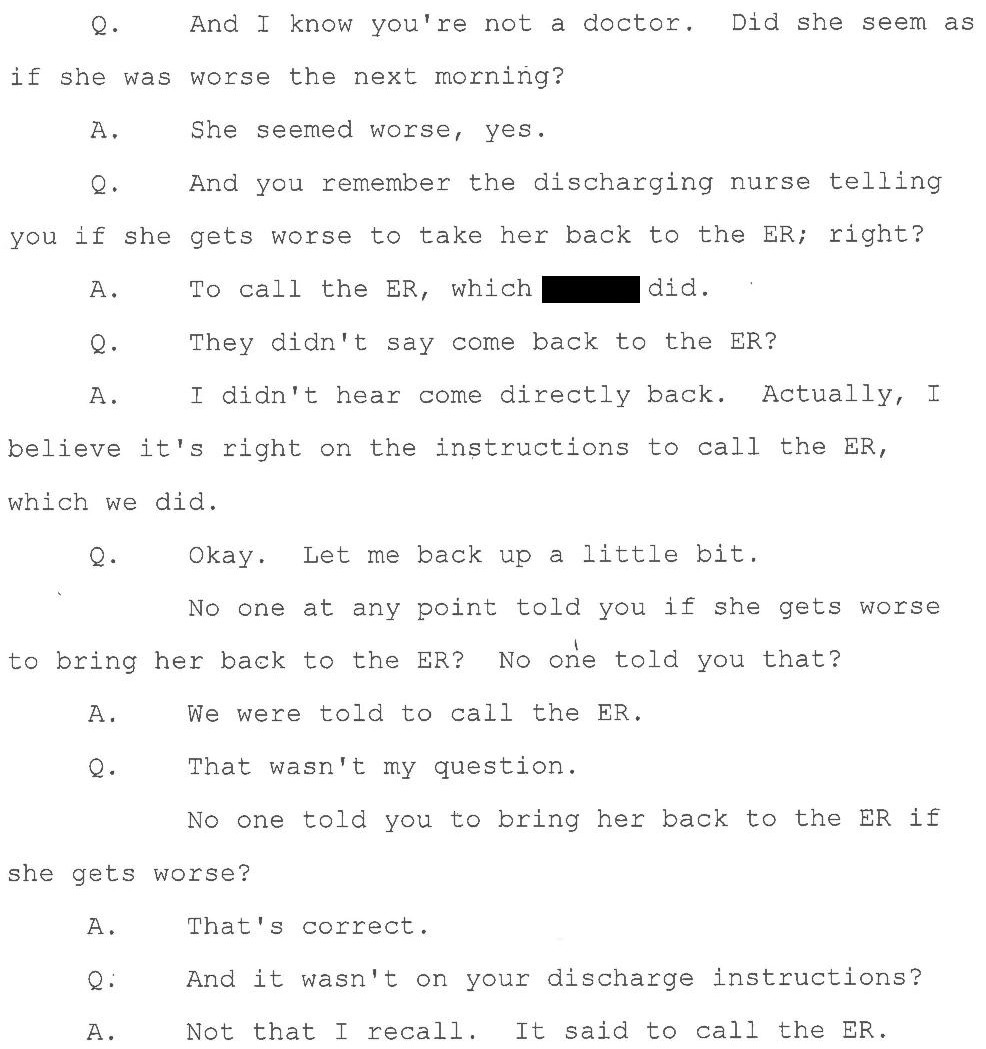
I have a really hard time believing that anyone told them to call the ER. I’m not aware of any ER staff member that would advise that. It just doesn’t make any sense, given that you’re essentially never going to get a hold of the same nurse or doctor again. However, I don’t doubt that the father may have misremembered the advice he was given due to the stress of the situation.
He claims that the discharge papers had written instructions to call the ER. If you scroll back up and look at them, I don’t think it says that anywhere. It says “Call your doctor if…” (which I take to be the PCP, although maybe he misunderstood that to mean the ER doctor) or “Go to the ER if…”, but nowhere does it explicitly say to call the ED.
Influenza attracts malpractice cases like moths to a flame.
We’re really starting to see an uptick in flu cases right now, so it’s the perfect time to brush up on related malpractice cases.
Here are 2 others that I’ve published:
Influenza Malpractice [Massive Verdict Against PA]

A 48-year-old man presented to an urgent care with fever, malaise, fatigue, and dizziness.

Having just read the three flu cases, my main take away (as an IM doc) is that children can decompensate so quickly.
On the subject of repeat vitals: I frequently harp on the importance of documenting repeat vital signs with the nurses, particularly in patients who were observed for a time in the ED prior to finalizing their disposition and/or
whose initial vitals are abnormal. As some of the nurses continue to be lackadaisical about it, when reassessing the patient, I sometimes use my phone to snap a pic of the bedside monitor to aid me in later entering the vitals into my note or even upload the pic into the record. It seems reasonable to offer antipyretic medication to a child with a fever and, if given, to recheck the temperature. Not that it would have changed the outcome in any way, but it doesn’t appear this patient’s fever was treated.